Pages

Friday, October 5, 2012

Mercedes sales hit new September record


BERLIN (AP) — Daimler AG says its main Mercedes-Benz brand saw global sales grow 2 percent in year-on-year terms in September as growth in the U.S. and Asia offset a decline in western Europe.
The company said Thursday Mercedes-Benz delivered 123,358 vehicles, a record for the month. Sales in the Asia-Pacific region were up 7.8 percent to 30,992, led by growth of 18 percent in Japan and 10 percent in China.
Sales in the U.S. rose 7 percent at 23,156. But deliveries in western Europe sank 2.5 percent to 55,495, a sign of the problems afflicting those countries that use the euro.
Daimler says the brand's overall sales in the third quarter were up 1.1 percent compared with a year earlier at 312,001. It says that is a record for the quarter.

'I don't think I have plenty of cricket left in me'

Sachin Tendulkar: "I am looking at it series by series.
 As long as I feel that I can deliver, I will continue playing." 

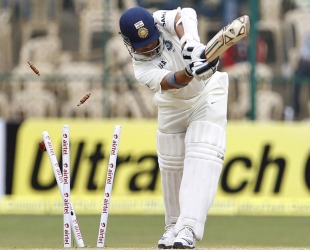
Sachin Tendulkar has said that he will reassess his cricketing future in November, when he plays the home Tests against England. Tendulkar, who has previously been non-committal on questions about his retirement, also said any decision about ending a 23-year career will depend on both his form and his motivation levels.
"I need not take a call right now. When I play in November, I will re-assess things," Tendulkar was quoted as saying in Times of India.
"I am 39 and I don't think I have plenty of cricket left in me. But it depends on my frame of mind and my physical ability to deliver. When I feel that I am not delivering what is needed, and then I will re-look at the scheme of things. I am already 39 and no one expects me to go on playing forever."
In his latest series, the home Tests against New Zealand, he was bowled in each of his three innings for low scores. Sunil Gavaskar was among those concerned by Tendulkar's poor form. "The gap between the pad and the bat is a worrying sign," Gavaskar had said. "This is never a good sign for a great batsman."
Tendulkar, however, felt that it was natural for the questions to be asked. "There are two different things - scoring runs and what I feel. For instance, if this three-wicket ordeal had happened when I was 25, no one would have questioned it. Incidentally, it happened when I am 39, so questions were raised. This is natural."
Tendulkar has played 190 Tests and he said he is not chasing any particular mark. India play England in a four-Test series starting November followed by another four-Test series against Australia early next year.
"I am looking at it series by series. As long as I feel that I can deliver, I will continue playing. It also depends on what the team feels and whether I am motivated enough to continue being on top of the game."

Facebook's 'Next Billion': A Q&A With Mark Zuckerberg

Mark Zuckerberg, chairman and CEO of Facebook

In 2004, Mark Zuckerberg launched Facebook (FB) from his Harvard University dorm room, hoping to see what his classmates were up to on campus. The following eight years brought international fame, unimaginable wealth, a hit Hollywood movie, a disastrous initial public offering, a sagging stock price—and one unprecedented achievement. On Sept. 14, the company reached 1 billion active users. In an exclusive interview with Bloomberg Businessweek’s Brad Stone and Ashlee Vance, Zuckerberg reflected on the milestone and what’s next for his company as it resurfaces from a wave of negativity.
Bloomberg Businessweek: Congratulations on your first billion users. What does this mean for Facebook?
Mark Zuckerberg: The No. 1 value here is focus on impact. We’ve always been small in terms of number of employees. We have this stat that we throw out all the time here: There is on the order of 1,000 engineers and now on the order of a billion users, so each engineer is responsible for a million users. You just don’t get that anywhere else. I was talking to [Facebook board member] Marc Andreessen about this and he said the only two companies that he thought of that had a billion customers are Coca-Cola (KO) and McDonald’s (MCD).

Microsoft (MSFT)?
That wouldn’t surprise me. It’s really humbling to get a billion people to do anything.

Did you guys think about doing anything with the billionth user, grocery store-style?
I wanted to, but we didn’t want to leak that we got to a billion people. Doing data analytics at this scale is a big challenge, and one of the things you have to do is sample. So it’s funny, we were all sitting around watching us get to a billion users but it was actually just a sample of the users. It’s like you’re not going to try to pull a billion rows from a database, so you’ll pull a sample and project out. I don’t even know if we knew who the billionth person was.

How did you celebrate the moment?
Well, just everyone came together and counted down. Then we all went back to work. We have this ethos where we want to be a culture of builders, right?

We don’t want to overly celebrate any particular milestone, so what we do is we have hackathons. We have themed hackathons for different things. We’re having a hackathon to celebrate this when we announce it publicly, and the theme is going to be the next billion. So people will be thinking of ideas and working on prototypes and things that we’ll need to do to help connect the next billion people, which I think is pretty cool.
What’s possible at a billion-plus users that wasn’t possible at, say, 500 million?
There are two ways that I look at this. There’s what we can build internally and then there’s what can be built externally using Facebook. I’ll start with the external stuff. The big thing we’ve focused on is getting everyone connected and assembling this map of who people know. That way we can start to build interesting products like News Feed, or show who’s online for chat, or rank your friends so they’re in the right order for a search. But even when we were at half a billion people, you got these large-scale services like Skype or Netflix (NFLX) that also had big user bases. And we weren’t yet at the point where the majority of their users were Facebook users, so they couldn’t really rely on us as a piece of critical infrastructure for registration. A lot of startups did, but the bigger companies couldn’t. Now really everyone can start to rely on us as infrastructure. That’s a pretty big shift.

So for the next five or 10 years the question isn’t going to be, does Facebook get to 2 billion or 3 billion? I mean, that’s obviously one question. But the bigger question is, what services can get built now that every company can assume they can get access to knowing who everyone’s friends are. I think that’s going to be really transformative. We’ve already seen some of that in games and media, music, TV, video, that type of stuff. But I think there’s about to be a big push in commerce.

Watermelon helpful to prevent heart attack and weight gain


A recent study in US has found that consuming a slice of watermelon on daily basis could help to prevent you from heart disease by checking the formation of harmful cholesterol and also be help in weight control.
Scientists from Purdue University, US, who carried out studies on mice fed a high-fat diet found the fruit halved the rate at which 'bad' low-density lipoprotein(LDL), accumulated, Daily Mail reported.
LDL is a form of cholesterol that leads to clogged arteries and heart disease.
In addition to that, the researchers also also observed that eating watermelon on regular basis helped to control excess weight gain and resulted in less amount of fatty deposits inside blood vessels.
According to the researchers, the presence of chemical citrulline, found in the juice of watermelon could be the reason for watermelon's health-boosting properties.
However, the latest investigation did not show any significant effects on blood pressure, it did reveal watermelons had a powerful impact on other heart risk factors.
In Britain around 270,000 people a year suffer heart attack and nearly one in three die before they could reach hospital.

Samsung boosted by smartphone sales


          High quality global journalism requires investment. Please share this article with others using the link below, do not cut & paste the article. See our Ts&Cs and Copyright Policy for more detail. Email ftsales.support@ft.com to buy additional rights. http://www.ft.com/cms/s/0/577894c2-0e8c-11e2-8b92-00144feabdc0.html#ixzz28Pl4LJC8

Strong smartphone sales helped Samsung Electronics beat market expectations in the third quarter, as the world’s biggest technology company by sales achieved an operating profit increase of more than 85 per cent.
The strong performance came despite the fact that during the third quarter Samsung was embroiled in a fierce US court battle with Apple, its main smartphone rival, which left it facing a damages bill of more than $1bn for patent infringement.
High quality global journalism requires investment. Please share this article with others using the link below, do not cut & paste the article. See our Ts&Cs and Copyright Policy for more detail. Email ftsales.support@ft.com to buy additional rights. http://www.ft.com/cms/s/0/577894c2-0e8c-11e2-8b92-00144feabdc0.html#ixzz28PlFpLep

But strong global sales of its Galaxy smartphones – the main subject of Apple’s intellectual property infringement claims – enabled Samsung to record strong increases in both revenue and profit, revealed in earnings guidance issued on Friday.

Revenue for the quarter was between $46bn and $47.7bn, up from $37.2bn a year before. Operating profit was between $7.1bn and $7.5bn, up from $3.8bn. A Bloomberg poll of analysts had produced a consensus forecast of $6.8bn for operating profit.

Samsung will publish a more precise report for the third quarter in the final week of this month.
Despite the outperformance of the consensus forecast, Samsung’s shares were trading only 0.15 per cent higher at Won1.37m in mid-morning trading in Seoul.

Marcello Ahn, an analyst at Nomura, said investors were taking profits amid concerns that Samsung would not repeat the positive surprise in the fourth quarter. Shares in the company have risen 62 per cent in the past 12 months.

Mr Ahn said strong smartphone sales contrasted with weaker performance at the semiconductor division. This was due to muted demand for memory chips from the PC market, and a later than expected launch for Apple’s iPhone 5, for which Samsung is the biggest supplier of components.

But Mr Ahn forecast another strong quarter in the final three months of the year, citing the recent launch of the Galaxy Note 2 tablet and an improved contribution from European sales as a result of a stronger euro.

Samsung and Apple are continuing to tussle over the fallout from August’s California court decision. Last month, Apple asked the judge to increase the damages award by $707m. Samsung responded this week by adding the iPhone 5 to a list of products that it said infringe its patents on data transfer technology. On Wednesday, Samsung also called for a new trial in the high-profile US patent case, citing concerns about one of the jurors.


Steve Jobs: nurturing the legacy of Silicon Valley's Leonardo


Steve Jobs, who died a year ago today, laid the foundations for Apple's stellar year but the real test is yet to come.

When Steve Jobs died, exactly a year ago today, there was a public outpouring of grief.
Apple acolytes queued around the block to lay flowers and light candles outside the company’s store on New York’s Fifth Avenue. Meanwhile Twitter struggled to keep up with the deluge of comments from fans as they paid homage to the Apple co-founder.
Mr Jobs’ relentless perfectionism had helped him create the iPod, the iPhone and the iPad and in so doing, the so-called “Leonardo of Silicon Valley” had not only built one of the world’s most successful companies, he had changed the way we lived.
But alongside the tears and tributes, there were concerns about the future. Some Wall Street analysts feared that, without its inspirational leader at the helm, Apple’s pipeline of game-changing new products would slow. The Cupertino technology giant could run out of ideas.
Commentators were also quick to note what a long way there was to fall. At the back of their minds was Mr Jobs’ first period of absence from the company – then, in 1985, Apple nearly went to the wall after a power-struggle saw him squeezed out. He returned just over a decade later to not only nurse the group back to health, but to preside over a period of extraordinary growth that turned Apple into the biggest company in the world.
But Apple has gone a long way to silencing those critics over the last year. Since Mr Jobs’ death, the company’s share price has nearly doubled from $372.50 to $671.73 by afternoon trading on Thursday. Apple is not just the biggest company in the world. With a market capitalisation of $630bn (£389bn), it is the biggest company there has ever been. Even Google, another technology giant, has not been able to match that trajectory with a value increase of around 50pc over the same period.
Apple’s financial performance has also been on a steady incline. Its profits rose 21pc to $8.8bn in the three months to the end of June, while sales rose 23pc to $35bn. Both were new records, although they did not quite meet analyst expectations, briefly rattling investor confidence. But the figures did not take account of the newly released iPhone 5, which is expected to push Apple’s numbers even higher.
“The business has powered ahead. From an operational point of view it’s doing astoundingly well,” said Shaun Collins, managing director of technology analysis firm CCS Insight.
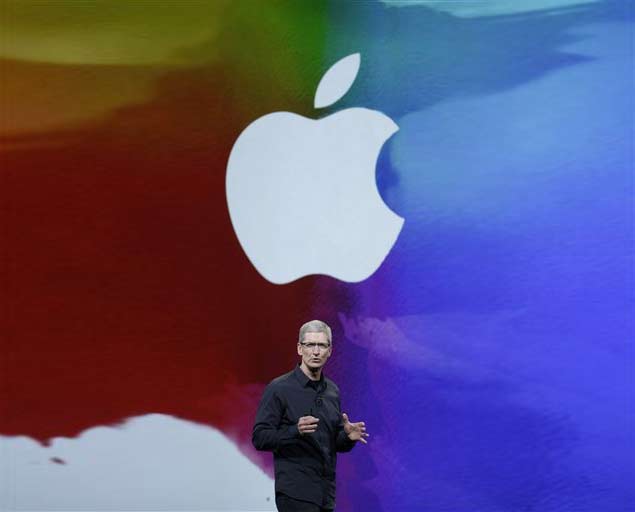
A lot of the credit goes to Mr Jobs. He launched the first iPhone, and laid the foundations for future iterations that would each be better looking than the one before. He is said to have given the iPhone 5 his blessing before he died. But Tim Cook, Apple’s former chief operating officer who took the helm of Apple a few months before Mr Jobs’s death, has also done a creditable job, winning investor confidence and stamping his own imprint on the business.
In the 12 months since Mr Jobs’ death, Apple has behaved in ways it never would have countenanced before. The notoriously secretive company has become more communicative with shareholders, going beyond the compulsory quarterly updates to tell investors what it plans to do with its cash reserves, for example. It has also started returning some of that money to shareholders, paying its first dividend for nearly two decades.
Insiders claim that Apple has also become more corporate, and that the power has shifted away from its creatives in favour of more traditional management types.
But perhaps the biggest departures from the Jobs era came last month. First Apple put out a product that was clearly sub par, jestissoning Google’s mapping service in favour of its own, home-grown version which was littered with geographical errors and spelling mistakes. It is questionable whether Mr Jobs – who famously telephoned staff in the middle of the night to quibble over the exact colour of logos when they appeared on the iPhone screen – would have let that slip through.
But even more surprisingly, Apple said sorry.
In an act of humility that, from Apple, was as worrying as it was unfamiliar,Mr Cook acknowledged the company had fallen “short” of its promise to deliver world class products. He even suggested that customers revert back to Google Maps while Apple fixed its own bugs.
Users claimed that Apple had sacrificed user experience just to get one over on Google, and that Mr Jobs would never have allowed such a thing to happen. But Mr Collins is not so sure: “Apple is at the stage in its journey where things have to change because of its scale. It’s too easy to say this wouldn’t have happened if Steve was still alive.”
What is clear is that the real test of Apple in the post-Jobs era lies in the year ahead, not the one that has just passed.

Sony pulls Xperia Tablet S from shelves due to water resistance issue


Sony has reportedly stopped the sales on Xperia Tablet S in Japan and other markets following concerns about its water resistance feature.
The problem with the tablet, which is supposed to be splash-proof, is the result of a manufacturing flaw at the Chinese plant where it is fabricated, Sony spokeswoman Noriko Shoji told Reuters.
Sony is not clear on when it will be able to resume sales of the tablet, Sony spokeswoman added.
Company has said that it will repair all the defected tablets free of charge, and does not think that the recall and repairs will have any significant impact on its earnings.
The Sony Xperia Tablet S went on sale September 7 in the US, followed by Japan, Europe and other markets. Company has shipped around 100,000 tablets till now.
The tablet features NVIDIA Tegra 3 quad-core processor, 9.4-inch display, 1GB RAM, Android 4.0 and 16GB/32GB of internal storage.

Wednesday, October 3, 2012

T-Mobile USA, MetroPCS to Merge


T-Mobile USA will merge with smaller rival MetroPCS Communications Inc., PCS -9.21%a deal that would give the fourth-largest U.S. wireless carrier more scale as it tries to compete with the industry's leaders.
The move further consolidates the U.S. wireless industry, but in a way that is likely to be well received by regulators, who last year shot down T-Mobile's $39 billion deal to be acquired by AT&T Inc. T +1.22% to avoid reducing the ranks of national carriers from four to three.
It also puts pressure on No. 3 wireless carrier Sprint Nextel Corp., S +3.88% which had previously explored mergers with both MetroPCS and T-Mobile and now lacks a clear path for quickly adding scale.
The combined company wil be called T-Mobile and run by T-Mobile Chief Executive John Legere. MetroPCS customers will be moved over to T-Mobile's network gradually as they upgrade their phones, and the smaller company's network will be shut down in 2015.
The deal is structured as a reverse merger, meaning MetroPCS in effect will swallow its larger rival. That approach will give T-Mobile a publicly traded stock, which would give T-Mobile parentDeutsche Telekom AG DTE.XE +0.11% a new route to raise capital for its U.S. subsidiary, as well as a path to pare down its investment in the U.S. over time.
Deutsche Telekom has long looked to exit the slow-growing U.S. market, where it has lacked the scale of the industry's leaders. But the deal signals that the German operator has concluded it needs to build up its investment in the U.S. first to preserve the value of the unit. The company's CEO, René Obermann, said on an investor call that the company sees the U.S. market as attractive and is committed to growing here.
Deutsche Telekom shareholders will own 74% of the combined company. MetroPCS shareholders will own the rest and be paid $1.5 billion in cash, or about $4 a share. U.S. regulators will have to approve the transaction, which the companies said should close by the end of June.
The German carrier said it will write down the value of its investment in T-Mobile, which will reduce its net income by between €7 billion and €8 billion (between $9 billion and $10.3 billion) this year. MetroPCS shares, which rose 18% Tuesday on reports a deal was close, fell more than 7% Wednesday.
The merger of T-Mobile and MetroPCS, the fifth-largest U.S. wireless carrier, would create a bigger No. 4 player in the industry, though the combined company—with about 42.5 million customers—will still lag behind Sprint by number of subscribers. By that measure, the combined company will still be less than half the size of market leaders Verizon Wireless and AT&T, which each have more than 100 million wireless customers.
Still, the deal sends the U.S. wireless market in a far different direction than it appeared to be heading last year when Deutsche Telekom was trying to sell T-Mobile to AT&T. That deal collapsed amid opposition from regulators, leaving Deutsche Telekom scrambling to find a new way to squeeze value out of its U.S. subsidiary.
Rather than sell the company, Deutsche Telekom is now staying in the U.S., paying to merge T-Mobile with MetroPCS and girding for a costly upgrade of T-Mobile's network to a next-generation technology called LTE. Executives touted the benefits of the merger for that network expansion: MetroPCS and T-Mobile own complementary slices of the airwaves, while MetroPCS has already upgraded many of the cities its network covers to LTE. The MetroPCS network covers 102 million people in the U.S. and 9.3 million subscribers.
For consumers, the deal could be a double-edged sword. If the integration goes well, it could ensure that T-Mobile, which has introduced low-cost and innovative pricing plans in recent years, remains a strong competitor. But it would also eliminate another scrappy player, MetroPCS, which helped pioneer affordable, no-contract cellphone service in the U.S.
Last month, T-Mobile named a new chief executive for T-Mobile: Mr. Legere, 54, formerly head of telecom provider Global Crossing Ltd. It also struck a deal to sell rights to its 7,000 cellphone towers to Crown Castle International Corp. CCI +3.00% for $2.4 billion in cash.
MetroPCS Chief Executive Roger Linquist, 74, has been interested in an exit of his own, people familiar with the matter have said. Earlier this year, he was close to a deal for MetroPCS to be acquired by Sprint, but it fell through when it was rejected by Sprint's board.
A deal with MetroPCS will help T-Mobile bulk up but won't remove several big hurdles as it struggles to compete with much-larger rivals.
The combined company will remain the only national carrier that doesn't sell Apple Inc.'sAAPL +1.00% iPhone, a predicament that has contributed to losses of 1.7 million contract customers at T-Mobile in the 12 months to June 30.
And it will still need to make major investments to expand its LTE network across the country to match the offerings of Verizon, AT&T, and Sprint. MetroPCS's high-speed network covers markets in dense parts of the country like Southern California and the Northeast.
A drawn-out integration process could present an opening for other carriers—Sprint in particular—to pick off T-Mobile customers. But the deal would leave Sprint caught between a strengthened T-Mobile and still dominant AT&T and Verizon.


Google announces Doodle 4 Google India 2012 competition

Google India has announced its Doodle 4 Google competition for 2012 and has invited school students between the ages of 5 to 16 years across the country to create innovative Google doodles. Winning doodle will be featured as the Google logo on the 14th November, which is also celebrated as Children's Day in the country. This year's theme is “Unity in Diversity

Google says the contest had received more than one lakh entries last year. And this year, the company hopes the participation will increase as the contest will reach 40 cities. Announcing this year’s competition, Nikhil Rungta, Country Marketing Head, Google India said, “Doodle 4 Google is a great opportunity for students to explore the intersection of art and technology, while sharing their talents and creativity on a national scale. Through this program we hope participants will have fun, think creatively and learn something new all at the same time.”
As per the tradition, the participants will be divided in three different categories. Group 1 will feature students from class 1 to 3, Group 2 has students from class 4 to 6 and Group 3 has students from class 7 to 10. The new thing introduced by Google is that the participants will divided into four regions – North, South, East and West. Google will shortlist three students from every region across each of the three groups.
The first round of entries will undergo preliminary judging, post which 12 entries will be announced based on a selection by a panel consisting of independent judges. All chosen entries will be exhibited for public voting, and based on the number of votes, one winner from each group will be selected. The Jury along with the original Google Doodler will then choose the final winning Doodle from all the finalists.
The last date to submit the entry is October 23rd, 2012. Check out other submission guidelines for the Doodle 4 Google competition here.
Take a look at the last year's winning doodle from Noida's Varsha Gupta:

Samsung Galaxy S III Sales Helped by iPhone 5, Patent Trial


Sales of Samsung's flagship Galaxy S III smartphone have not been hurt by the release of Apple's iPhone 5 or Cupertino's big patent win, according to new data from mobile app analytics and marketing firm Localytics. In fact, Galaxy S III sales were actually helped by the news.
Sales of the uber popular Android device have seen an average weekly growth of 9 percent each week since Aug. 1, Localytics said. But interestingly, the Samsung Galaxy S III logged larger spikes in adoption after two major news events — the Apple patent trial verdict and the iPhone 5 launch.
Case in point — sales of new Galaxy S III devices jumped 16 percent from Aug. 21 - 27. That's the same week that Samsung was dealt a major blow when the jury in its patent case against Apple ruled in favor of Cupertino on a number of key claims and awarded Apple more than $1 billion in damages.
"The deluge of post-litigation press coverage both drove general attention to Samsung and suggested that Samsung devices were similar enough to iPhones to be an option for many consumers," Localytics wrote.
Moreover, Galaxy S III sales spiked 15 percent beginning the week of Sept. 12, when Apple unveiled the new iPhone 5. Following the iPhone 5 announcement, a number of media outlets, including PCMag, posted stories comparing the two phones, most of which again suggested the rival devices have similar capabilities.
The data also suggested that many customers were waiting to hear about the new iPhone before making their decision. Leading up to the iPhone 5 announcement, sales of the Galaxy S III were the same as the previous week, resulting in 0 percent growth.
"A portion of smartphone users appear less tied to a particular operating system, instead comparing the full package of device, mobile network and available apps before choosing what to buy," Localytics wrote. "This not only creates new opportunities for Android device manufacturers but also new Windows 8 devices."
Localytics provides app analytics and marketing products to iOS and Android app developers. To reach its conclusions, Localytics studied the number of Samsung Galaxy S III handsets running apps leveraging its analytics from July 31 to Oct. 1, then determined the weekly growth in new Galaxy S III handsets around the world.
For more, see PCMag's review of the iPhone 5 and the slideshow below, as well as ourreview of the Galaxy S III.

Tuesday, October 2, 2012

Apple CEO thanks employees for incredible year, grants extra time off

Apple CEO has been busy writing letters off-late. First came the open letter to customers apologising for a less than satisfying experience with maps in iOS 6. Now, Tim Cook has taken time out to thank Apple employees for an "incredibly successful year" in an internal email sent to all staff.


Team,
Apple is having another incredibly successful year, thanks to all of the hard work by you and your teams. Your focus and dedication to making the best products on earth is what makes Apple such an incredible place.


In a little over six months we've launched outstanding new products in each of our major categories, starting with the new iPad this spring. The response was incredible, and continued to show Apple's unrivaled leadership in this post-PC era. Over the summer we introduced the radically thin and light 15″ MacBook Pro with Retina display, and shipped  Mountain Lion, the fastest-selling update to OS X ever. Today, iPhone 5 is taking the world by storm. And in the next few weeks we'll ship the new iPod touch and completely redesigned iPod nano with innovative designs that our customers are going to love this holiday season.

To recognize the efforts that made this amazing year possible, I'm happy to announce that we're extending the Thanksgiving holiday once again this year. We will shut down with pay on November 19, 20 and 21 so our teams can spend the whole week with their loved ones.

Retail and some other teams will need to work that week so we can continue to serve our customers, but please check with your manager about taking time off at a later date. Our international teams will also get an extra three days off during this quarter, scheduled at a time that's best for them. Details will be available on AppleWeb.

Thank you for everything you do for Apple and please enjoy this much deserved break.


Before they go on the break, Apple employees have the small matter of overseeing the rumoured launch of the iPad mini, which may happen later this month.

HTC upgrades One X smartphone with faster processor, more storage


The HTC One X+ will start shipping in Europe and Asia in October, and a U.S. model will soon be announced

IDG News Service - HTC has upgraded its flagship smartphone, the One X, with a faster processor, twice the integrated storage capacity and a bigger battery, the company said on Tuesday.

The new model is called the HTC One X+, and the company is hoping that it can compete more successfully than its predecessor with Samsung's Galaxy S III and Apple's iPhone.  Like other vendors, HTC has had a hard time keeping up with the smartphone market's two dominating forces.
The One X+ is powered by a 1.7GHz quad-core Nvidia Tegra 3 AP37 processor and has 64GB of integrated storage.
The processor upgrade will improve the overall performance of the phone, including smoother gaming and faster downloads, according to HTC. The original 3G model had a 1.5GHz quad-core processor.
HTC has also increased the size of the battery from 1,800mAh to 2,100mAh.
The screen still measures 4.7 inches and has the same 1280-by-720-pixel resolution, but it is now protected by Gorilla Glass 2. The phone's size is also the same, but it is 5 grams heavier.
The phone now announced is 3G only, according to HTC's spec sheet.
In the U.S. LTE has become a standard feature on smartphones from Verizon Wireless and AT&T. But LTE has also started to take off in Europe; the Samsung Galaxy S III and the iPhone 5 both support LTE spectrum bands used in countries such as the U.K. and Germany.
HTC didn't immediately reply to questions about a One X+ with LTE for Europe. Details about the U.S. launch will be announced shortly, according to HTC.
On the software side, the One X+ will use Android 4.1 (also known as Jelly Bean), which will also be available for the One X and the One S from October.
The new phone will start shipping in October in Europe and Asia, but pricing was not announced.